


Introduction: Beyond the Noise
It’s easy to feel a sense of information overload with the constant stream of AI news, product launches, and market hype. Every day brings a new claim of breakthrough technology, making it difficult to separate genuine progress from fleeting trends.
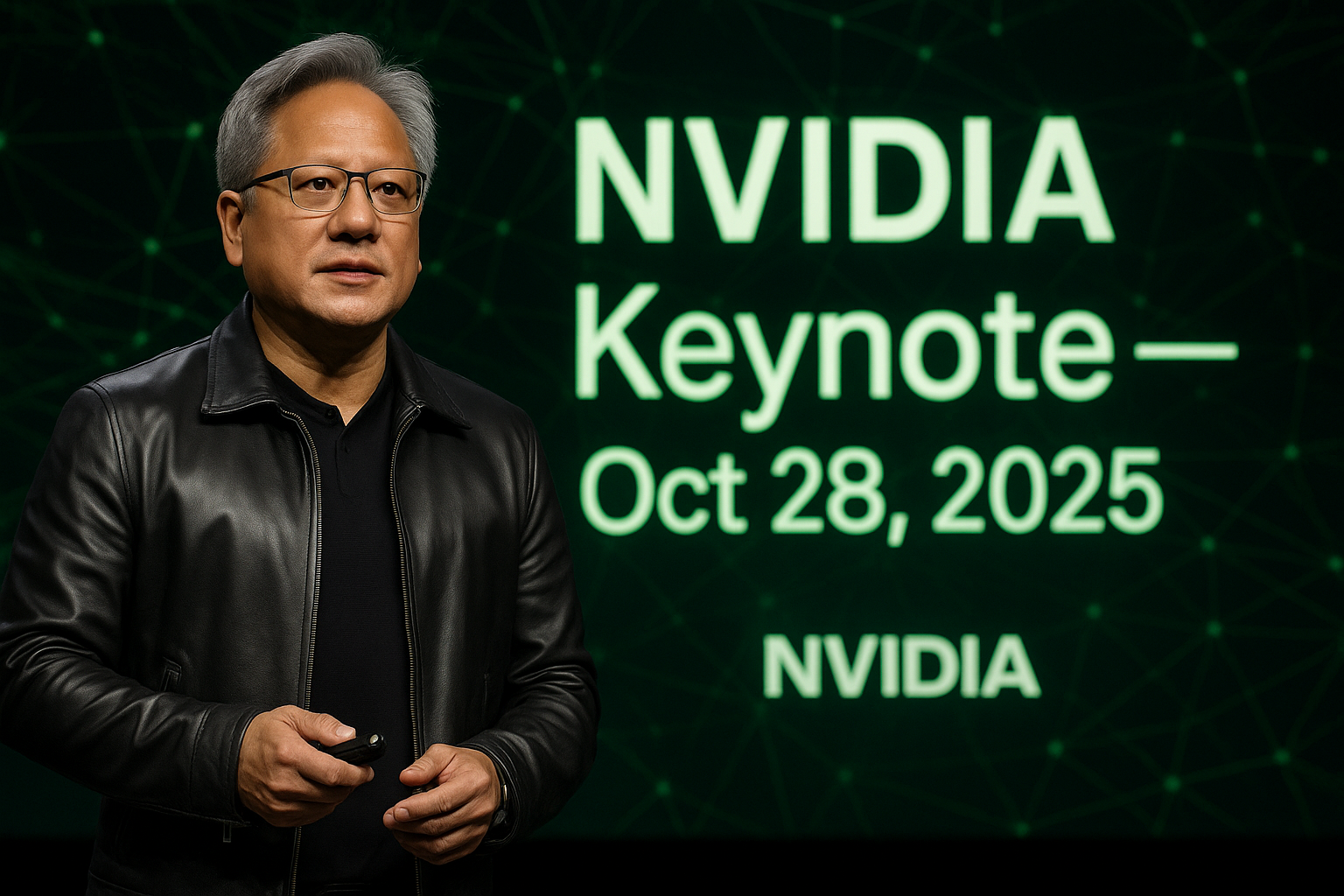
Nvidia CEO Jensen Huang’s recent GTC keynote, however, cut through that noise with a clear and expansive vision for the future. Moving beyond abstract promises, he unveiled a series of concrete partnerships and technological advancements that signal a new era for artificial intelligence. Here are the five most impactful and counter-intuitive takeaways from the event that will change how you see AI's future.
--------------------------------------------------------------------------------
1. Nvidia Isn't Just a Chip Company Anymore—It's Building AI's Central Nervous System
Nvidia is strategically transforming from a hardware supplier into a full-stack AI infrastructure provider. This shift was underscored by a slate of new partnerships that embed its technology into the foundational pillars of the economy and society.
This expansion moves Nvidia far beyond its traditional datacenter stronghold, integrating its AI capabilities into:
This strategy is about more than just finding new markets; it's about making Nvidia's technology indispensable to critical global infrastructure. This investment follows a clear pattern of strategic equity stakes in key partners like Intel and Wave, signaling Nvidia's broader strategy to build a deeply integrated ecosystem, extending its influence fromthe data center to the network edge. As Huang himself noted, this move intotelecommunications is of strategic national importance.
"Telecommunications is a critical nationalinfrastructure — the digital nervous system of our economy and security."
--------------------------------------------------------------------------------
2. Forget the "AI Bubble"—We're Entering an Eraof Unprecedented Scale
Amid persistent questions about an AI market bubble, JensenHuang offered a simple refutation: the demand is real, and the scale ofinvestment is justified by tangible value. His core argument is that AI modelsare now so powerful and useful that customers are more than willing to pay forthe services they enable, which in turn justifies the massive spending on theunderlying computational infrastructure.
"I don't think we are in an AI bubble. We are using allthese different AI models—we are using a large number of services and are happyto pay for them."
To substantiate this claim, Huang revealed production andsales figures that point to a sustained, long-term build-out of AI capacity:
This immense scale isn't a sign of speculative hype. It's adirect reflection of the real, sustained, and growing demand for AI computationfrom nearly every sector of the global economy.
--------------------------------------------------------------------------------
3. The importance of AI-RAN
Nvidia's partnership with Nokia is about much more than afinancial investment; it's about fundamentally redesigning the architecture ofwireless networks. The core concept is AI-RAN (AI Radio Access Network), atechnology that will transform passive cell towers into intelligent,distributed AI hubs.
Key elements of the partnership include:
The implication of this is profound. Instead of sending datato be processed in distant cloud data centers, AI-RAN will move AI computationto the network's edge. This shift will dramatically reduce latency, enabling anew class of real-time applications—from truly autonomous vehicles and dronefleets to large-scale augmented reality—that are not feasible with today'snetwork architecture.
--------------------------------------------------------------------------------
4. Quantum Computing's Future Is... Plugging Into a GPU
In a surprising twist, Nvidia's vision for quantum computingisn't one where quantum processors replace classical supercomputers. Instead,they will work together as integrated systems. To enable this, the companyintroduced NVQLink, a new system architecture designed to directly connectquantum processing units (QPUs) with GPUs and CPUs.
This hybrid approach is designed to solve one of quantumcomputing's most significant challenges: error correction. By offloadingcomplex error-correction tasks to powerful GPUs, the fragile quantum processorscan focus on their primary computations. The industry has responded withoverwhelming support for this paradigm shift. Already, 17 quantum computingcompanies and 9 U.S. national labs have committed to supporting the NVQLink architecture, signaling a new, practical path forward for the entire field.
"We now realize that it is essential to connect quantumcomputers directly to GPU supercomputers. This is the future of quantumcomputing."
--------------------------------------------------------------------------------
5. The Robotaxi Revolution Is Arriving at Scale: A100,000-Vehicle Fleet Is on the Way
Moving from infrastructure to a tangible real-worldapplication, Nvidia announced a landmark partnership with Uber that signals thebeginning of mass-scale autonomous transportation. Uber plans to deploy a fleetof 100,000 Level 4 robotaxis on its global network, with a phasedrollout scheduled to begin in 2027.
This massive fleet will be built on Nvidia's DRIVE AGXHyperion 10 autonomous vehicle platform. Stellantis, the parent company ofChrysler, will be one of the first manufacturers to supply the vehicles for theprogram. While Uber already has partnerships with players like Waymo, this100,000-vehicle commitment with Nvidia-powered hardware signals a strategicshift from software integration to building a dedicated, massive-scale fleetfrom the ground up. It marks a critical inflection point for autonomous driving,moving beyond small pilot programs toward the widespread deployment of atechnology that will become a daily reality for millions.
--------------------------------------------------------------------------------
Conclusion: The New Fabric of Reality
The GTC keynote was not just a product showcase; it was ablueprint for a future where intelligent systems are seamlessly integrated intosociety's core infrastructure. By funding the very 6G networks its edge deviceswill run on, creating hybrid quantum systems for foundational science, andcommitting to a 100,000-vehicle robotaxi fleet, Nvidia is moving beyond sellingcomponents and is now architecting the physical fabric of the AI era.
As AI becomes seamlessly integrated into our coreinfrastructure, what is the one industry you believe will be most profoundlytransformed next?

The sources you provided are:
• A comprehensive look at the key points of Jensen Huang's speech at NVIDIA GTC: heavyweight collaborations such as 6G, NVQLink integrating quantum computing and supercomputing, refuting the AI bubble, and Blackwell made in the USA - Longbridge
• In DC, Nvidia CEO Touts New AI Partnerships, Goes a Little MAGA | PCMag
• NVIDIA and Nokia to Pioneer the AI Platform for 6G — Powering America's Return to Telecommunications Leadership
• Nokia Stock Rally Signals Revaluation as Nvidia Ties Spark AI Infrastructure Pivot
• Nokia Stock Surges 22% as the Telecom Giant Inks $1 Billion Deal with Nvidia | TIKR.com
• Nokia commits to full AI-RAN GPU play on new Nvidia RAN compute platform
• Nvidia takes $1 billion stake in Nokia : r/stocks - Reddit
• Nvidia's new playbook: From chips to AI partnerships - FXStreet
• Who benefits most from the Nvidia-Nokia deal? - Fierce Network
• Why Nvidia Is Betting $1 Billion on Nokia - Techloy
